Spain to invest €5bn to mitigate effects Middle East conflict, including reduction of fuel VAT
Government plans to temporarily stop special tax on electricity and reduce electricity generation tax
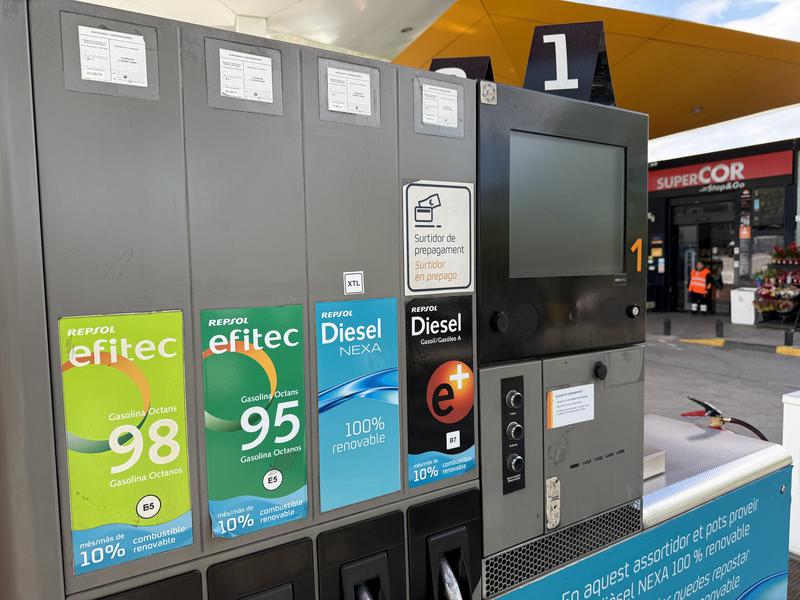

The Spanish government will invest €5 billion in measures to mitigate the effects of the conflict in the Middle East.
The anti-crisis measures were approved on Friday in an extraordinary meeting of the Council of Ministers.
Prime Minister Pedro Sánchez explained that the plan includes a "drastic" reduction in energy tax, with measures such as the reduction of VAT from 21% to 10% on fuels, electricity, and gas.
The executive has also extended the electricity social bonus until December 2026, and boosted the heat bonus too.
Sánchez also announced an 80% rebate on tolls to exposed industries, and direct aid of 20 cents per litre of fuel for the agricultural sector.
The reduction of VAT on gasoline will translate into €20 in savings per average car deposit.
Authorities say the measures will benefit a total of 20 million households and 3 million companies.
For Sánchez, the plan includes conjunctural measures to both alleviate the immediate effects of the conflict and protect the most exposed sectors, as well as structural ones to continue with the policy of decarbonization and electrification of the Spanish economy.
Conjunctural measures
The conjunctural measures include the reduction of VAT from 21 to 10% on fuels, which will translate into an effective reduction of 30 cents per litre depending on the type of fuel.
The plan also reduced VAT on electricity and gas, and a maximum price of barreled gas will be set.
The Spanish government has agreed to prohibit energy supply cuts for the most vulnerable households, and extend the social electricity bonus until December 2026, as well as "substantially strengthening" the thermal bonus.
Sánchez recalled that the most exposed industries are electro-intensive, and therefore authorities will subsidize 80% of their tolls.
The agricultural sector will get direct aid of 20 cents per litre of fuel, equivalent aid for the purchase of fertilizers, and "greater flexibility" in energy supply contracts.
The plan also foresees that market regulators will have greater capacity to "pursue and eventually punish" companies that take advantage of the crisis.
Structural measures
Sánchez explained that the decree-law incorporates other measures to "continue" with the decarbonization policy promoted by his government.
"Today we are more resilient thanks to the deployment of renewables, and we must continue on this path," the head of the executive pointed out.
The anti-crisis package includes the entry into force of a "massive" set of income tax deductions for the installation of solar panels, charging points, and heat pumps.
There will also be tax deductions in the personal income tax for those who "invest to contribute to the energy sovereignty" of Spain.
The executive will also provide aid for the acclimatization of buildings and for the acceleration of the installation of renewable energies.
Catalan aid package
Catalonia's Minister of Economy and Finance, Alícia Romero, has announced that next Tuesday the Executive Council will approve a "first package" of direct aid for companies and subsidized financing for economic sectors affected by the war in the Middle East.
In a press conference, Romero ruled out reducing income tax collection as proposed by Junts and PPC.
Romero warned that proposals such as rental aid cannot be incorporated, considering that there are no budgets. "Without budgets, a very ambitious approach for families is impossible," she concluded.
In addition to the "first package" that the Government will approve next Tuesday, the minister has indicated that there will "probably" be other packages.
In view of the increase in fuel prices, the Catalan government plans, on the one hand, to give direct aid to companies and, on the other hand, to subsidize financing through the Catalan Institute of Finances.
It has not made public how much resources the government plans to allocate to these measures.
The sectors most affected are agriculture, fishing, transport and the mobility sector. Romero has guaranteed that it will be "clearly" included that any aid must be linked to the fact that no jobs are lost.